Most swim schools, gyms and sports coaching businesses in Australia roster staff against the Fitness Industry Award 2020 (MA000094), which sets minimum pay rates, casual loadings, minimum engagement periods and weekend penalty rates. Getting the roster right means paying the correct rate for the correct shift, not just filling timeslots. Intrac helps facilities build rosters around these rules so admin staff aren't recalculating pay by hand every week.
This article is for facility managers and admin staff who build the weekly or termly roster for casual swim teachers, gym instructors, tennis coaches and similar roles. It covers the current minimum rates, how casual loading and weekend penalties stack up, the minimum engagement exception that matters most for short lesson blocks, and where rostering mistakes tend to creep in. It is general information only, not legal or industrial relations advice. Award rates and clauses are reviewed and can change every 1 July, so always check the current version at the source before you rely on a figure.
- Which award applies to your coaches and instructors?
- What are the minimum pay rates right now?
- How does casual loading work on weekdays and weekends?
- What's the minimum engagement period for a casual shift?
- What penalty rates apply on weekends and public holidays?
- Where do rostering compliance mistakes actually happen?
- Building a roster you can actually audit
Which award applies to your coaches and instructors?
The Fitness Industry Award 2020 (MA000094) is the award that typically covers employees in fitness centres, gyms, swim schools and sport and recreation coaching businesses, including casual instructors, trainers and coaches. It sets classification levels, minimum pay rates, hours of work, casual loading, overtime and penalty rate provisions. Coverage depends on the actual work performed and the employer's industry, not the job title alone, so it's worth checking award coverage against your specific business rather than assuming.
If your facility also runs retail, hospitality or other functions alongside coaching and classes, more than one award may be relevant to different roles. The safest approach is to classify each role against the award's classification definitions, not against what a similar business down the road happens to pay.
- The Fitness Industry Award 2020 (MA000094) commonly covers swim school, gym and sports coaching staff.
- Coverage is based on the work actually performed, not the job title.
- Mixed-function facilities may need to check more than one award clause by role.
- Always confirm current coverage and rates at the official source before relying on a figure.
What are the minimum pay rates right now?
As at rates effective 1 July 2026, the Fitness Industry Award 2020 sets minimum hourly rates including Level 2 at $26.44, Level 3 at $27.97 and Level 3A at $29.45 (source: Fair Work Commission, Fitness Industry Award 2020, MA000094). These are minimum rates for the relevant classification level. Many instructor and coaching roles sit at Level 3 or Level 3A depending on qualifications and responsibilities, so the first job in rostering is classifying each coach correctly, not just picking a number that sounds familiar.
Award rates are reviewed annually and typically change on 1 July. A rate that's correct today can be wrong in twelve months, and a roster template built around last year's numbers will quietly underpay staff. Build a habit of checking the current award page every July before the new financial year's first pay run, rather than relying on memory or an old payslip template.
How does casual loading work on weekdays and weekends?
Casual employees under the Fitness Industry Award receive a loading on top of the minimum hourly rate: 25% for ordinary hours worked Monday to Friday, and 30% for ordinary hours worked on Saturday, Sunday or a public holiday (clause 12.1, awards.fairwork.gov.au/MA000094.html). This loading is separate from any weekend penalty rate. The two can apply together depending on the day and classification, which is exactly the kind of detail that gets missed in a manual spreadsheet roster.
Because most swim lessons, group fitness classes and junior sport sessions are scheduled around school hours, after-school slots and weekends, a facility's casual coaching workforce is disproportionately exposed to these loadings compared to a typical nine-to-five business. Rostering tools that calculate pay by day of week, not just by hours worked, make this far less error-prone.
- Monday to Friday ordinary hours: 25% casual loading on the minimum rate.
- Saturday, Sunday or public holiday ordinary hours: 30% casual loading on the minimum rate.
- Loadings apply on top of the applicable classification rate, not instead of it.
What's the minimum engagement period for a casual shift?
Casual employees generally must be engaged for a minimum of 3 hours per shift under the Fitness Industry Award, but instructors, trainers and tennis coaches at certain classification levels may instead be engaged for a minimum of 1 hour (clause 12.3, awards.fairwork.gov.au/MA000094.html). This exception matters enormously for facilities that run short, discrete lesson blocks. A single 45-minute swim class or a one-hour tennis clinic doesn't automatically trigger a 3-hour minimum pay obligation if the coach's role qualifies for the shorter minimum engagement.
The catch is that this is role-specific, not facility-wide. A front-desk casual covering a single front-of-house shift is a different classification to a tennis coach running back-to-back one-hour clinics, and the minimum engagement rules can differ between them even on the same roster. Treat this as a per-role check, not a blanket assumption.
What penalty rates apply on weekends and public holidays?
On top of casual loading, the award sets penalty rates of 125% of the minimum hourly rate on Saturday, 150% on Sunday, and 250% on a public holiday (clauses 20.1 and 26.3, awards.fairwork.gov.au/MA000094.html). Weekend classes are often a facility's busiest and most profitable sessions, junior sport on Saturday mornings, family swim lessons on Sunday, which also makes weekend labour cost the line item most likely to be under-budgeted if penalty rates aren't built into pricing and rostering from the start.
When you set term pricing for weekend classes, cost the coach's hourly rate including casual loading and penalty rate first, then price the class, not the other way around. It's the single most common reason weekend programs look busy but earn less than weekday ones.
Where do rostering compliance mistakes actually happen?
Most award compliance mistakes in facilities aren't deliberate. They come from spreadsheet rosters that don't recalculate pay when a shift moves day, or from coaches being rostered across multiple short blocks without anyone checking whether the combined shift still meets minimum engagement rules. A coach who teaches a 9am and an 11am class with a two-hour gap between them is a different pay scenario to one who teaches back-to-back, and manual rosters rarely flag the difference.
Other common gaps include treating a contractor arrangement as if it removes award obligations (classification depends on the actual working relationship, not the label on the invoice), and not keeping time and pay records in a form that would survive a Fair Work audit. Record-keeping obligations apply regardless of how small the roster is.

A roster built around class demand, not award clauses, is how facilities end up underpaying weekend coaches without realising it. Intrac ties staff rostering to the actual class timetable so pay rules follow the shift automatically.
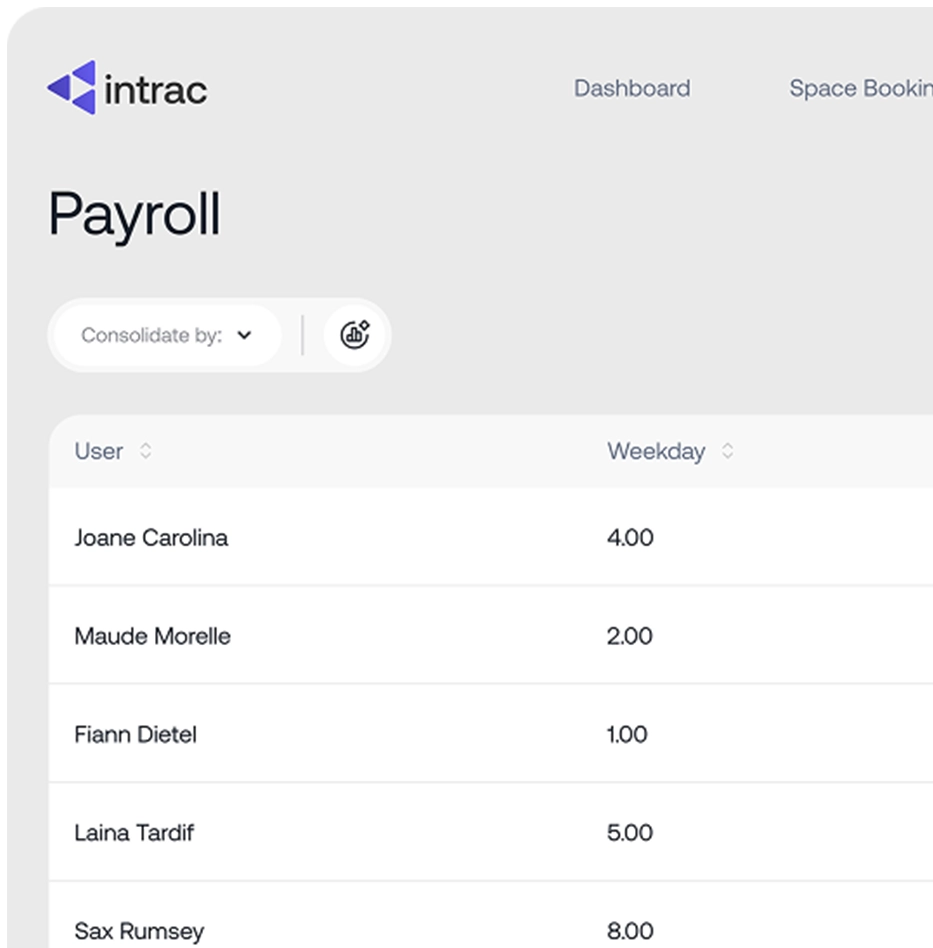
Intrac links staff rostering to the class and program schedule, so shifts, loadings and records sit in one place instead of a separate spreadsheet.
Build shifts directly from scheduled classes and bookings, not a disconnected spreadsheet.
Keep time, classification and pay records together for payroll and audit purposes.
Reassign a class to a different instructor and keep an accurate roster history.
Building a roster you can actually audit
A roster you can defend in an audit has three things: correct classification for every coach, pay rules that follow the day and shift length automatically, and a record of what was actually worked, not just what was planned. None of that requires a large payroll team. It requires the roster and the timetable to be the same system, so a changed class time or a swapped coach updates pay calculations without someone re-doing a spreadsheet formula.
- Confirm each coaching role's classification level against the award, not against habit.
- Check the current minimum rates every July before the new financial year's first pay run.
- Flag weekend and public holiday shifts so loadings and penalty rates apply automatically.
- Keep time and pay records in a form you could hand to an auditor tomorrow.
None of this is legal advice, and award clauses, classifications and rates can change. Always check the current Fitness Industry Award text before you rely on a number. If you'd rather your roster and payroll calculations update themselves against your class timetable, see what Intrac's features cover across class scheduling and staff rostering, check pricing, or book a demo to walk through your own roster.