Memberships and casual passes aren't competing products. They're two different bets on how a customer uses your facility. Memberships suit people with a regular weekly habit and reward you with predictable, automated revenue through direct debit. Casual passes suit irregular or seasonal use and avoid locking someone into a commitment they'll resent. Intrac runs both side by side, billed the way each one actually needs to be billed.
This is for sports facility and gym operators deciding whether to push harder on memberships, keep offering casual passes, or run both properly instead of letting casual visits quietly become the default because nobody's offering membership at the right moment. Below is how to tell the two apart, price them fairly, and stop losing members you could have kept.
Membership, term pass or casual multi-visit pack
A membership is an ongoing commitment, usually billed by direct debit, that renews automatically until the customer cancels. A term pass is a fixed commitment for a defined period, a school term of swim lessons for example, that simply ends unless the family re-enrols. A casual multi-visit pack is prepaid, has no ongoing billing relationship, and expires or depletes with no renewal expectation either way.
Each one needs different handling. Memberships need churn management and direct debit administration. Term passes need a strong re-enrolment process at the end of each term. Casual packs need almost no ongoing admin at all. The work is all upfront, at the point of sale.
- Membership: ongoing, auto-renewing, billed regularly until cancelled.
- Term pass: fixed period, ends on its own, needs active re-enrolment.
- Casual pack: prepaid, no ongoing relationship, no renewal decision to manage.
- Each model needs a different operational process, not just a different price.
- Memberships need ongoing churn management; term passes need re-enrolment pushes.
- Casual packs are the lowest-admin option but the least predictable revenue.
Why churn matters more than sign-ups
A facility can sign up plenty of new members and still shrink if churn quietly outpaces growth. Sign-ups are visible and feel like progress; churn happens member by member, often without anyone noticing until the monthly numbers are down and nobody can say exactly when it started.
Track active members over time, not just new sign-ups per month. A facility adding twenty members and losing twenty-five a month is going backwards no matter how good the sign-up numbers look on their own.
This is also why marketing spend aimed purely at acquisition can quietly waste money. A new-member promotion that brings people in the door for a discounted first month, with no plan for what keeps them past that month, often just recycles the same churn problem with extra marketing cost attached. Fixing the reasons members leave is usually a better return than spending harder to replace them.
Contract length and direct debit, done fairly
Intrac operates with no lock-in contracts, and the same principle tends to serve facilities well with their own members: a contract that's genuinely easy to leave is one families trust enough to join in the first place. Lock-in periods can reduce short-term churn, but they also create resentment that shows up as a flood of cancellations the moment the lock-in ends.
Direct debit via BECS is the standard way to bill Australian memberships. It's reliable, low-cost per transaction, and expected by most customers. What matters operationally is that the billing is accurate, failed payments are retried and communicated properly, and a member can see exactly what they're being charged and why, without having to call and ask.

Spotting a member about to churn
Members rarely cancel out of nowhere. Attendance usually drops first: fewer visits per week, then fewer per month, then a failed direct debit payment they don't bother updating. Each of those is a signal worth acting on before the cancellation request arrives.
A common pattern that works is a simple attendance-based trigger: when a previously regular member's visits drop noticeably for a few weeks running, that's the moment for a genuine check-in, not an automated discount email that reads like every other marketing message they've ignored.
A failed direct debit payment is one of the clearest early churn signals you have. Follow it up personally within a day or two, rather than letting an automated retry be the only contact the member gets.
Win-back offers vs chasing discounts
A discount can bring a lapsed member back for a month, but it also teaches every member that cancelling gets rewarded with a cheaper rate, which trains the exact behaviour you're trying to reduce. A win-back offer works better when it's tied to something that addresses why they left in the first place: a different class time, a different program, or simply a personal call acknowledging they've been missed.
Reserve discounting for genuinely rare, time-limited situations, not as the default lever every time someone threatens to leave.
It also pays to separate a true win-back, someone who has already cancelled, from retention of someone who's merely at risk. A win-back conversation can afford to ask directly what would bring them back, since there's nothing left to lose by asking. A retention conversation with someone still active needs a lighter touch, because a clumsy save attempt can sometimes accelerate the cancellation it was meant to prevent.

Memberships only generate predictable revenue if the billing behind them is trusted and accurate. Intrac's direct debit payments give members a clear, auditable record of what they're being charged, every cycle.
Intrac bills memberships automatically, confirms every payment, and gives members a clear record without a single lock-in contract.
Direct debit runs on schedule without manual intervention each cycle.
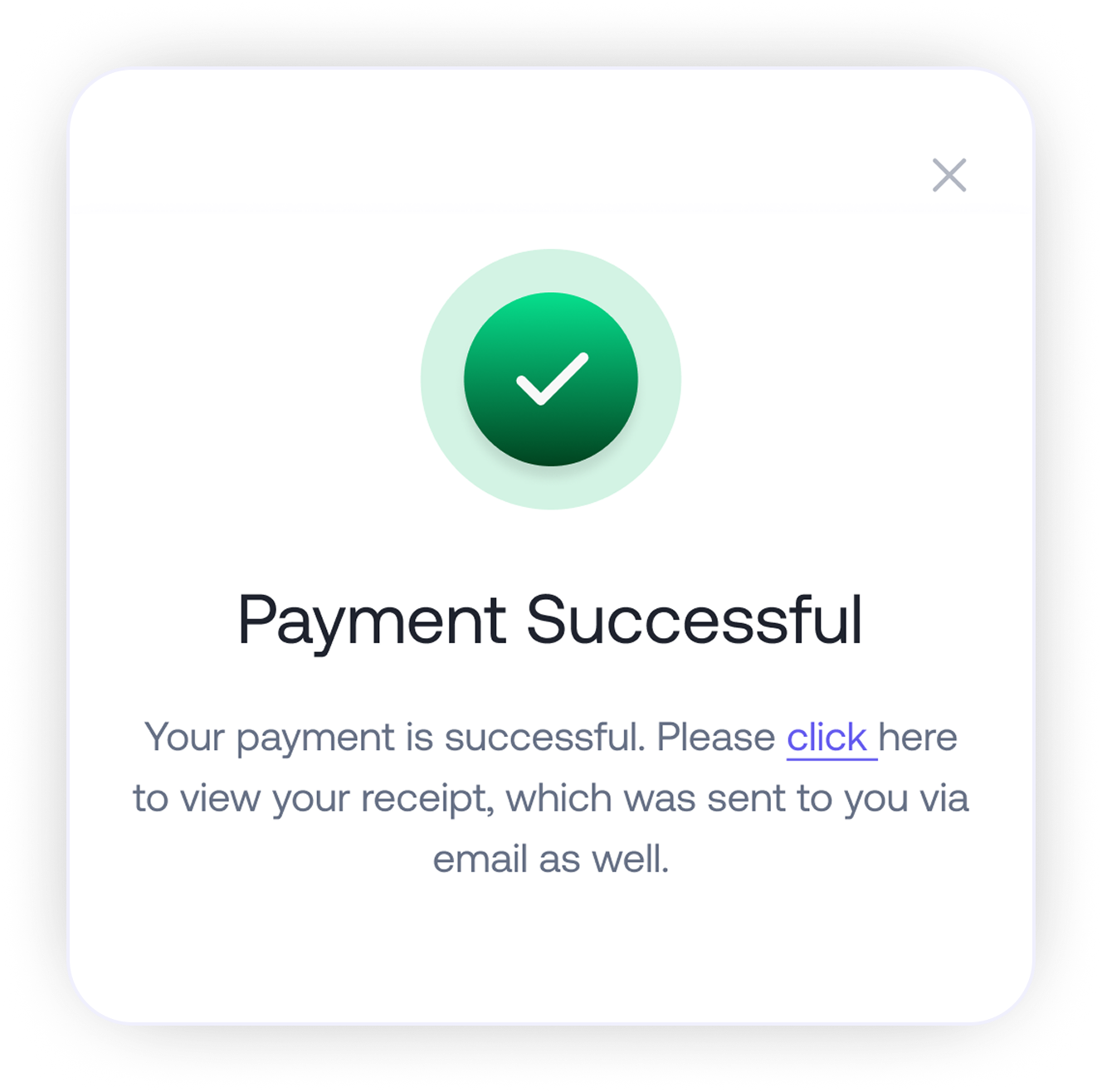
Members get an emailed receipt the moment a payment succeeds.
Members can leave cleanly, which is what makes them trust joining in the first place.
Reporting churn the right way
Churn reported as a single monthly percentage hides where the problem actually is. Cohort-based reporting, tracking a specific group of members who joined in the same month and watching how many remain six and twelve months later, shows whether a recent change (a new sign-up offer, a price change, a program shuffle) is actually helping or quietly hurting retention.
This kind of reporting takes real discipline to maintain by hand, which is exactly why most facilities don't do it, and exactly why the ones that do tend to spot problems months before the raw membership count shows anything wrong.
The payoff is catching a bad trend early enough to do something about it. If the cohort that joined this quarter is retaining noticeably worse than the one from last quarter, something changed: a price rise, a program cut, a run of billing issues. It's far easier to trace and fix that cause while it's three months old than once it's a full year of quietly eroded membership numbers.
- Track active members over time, not just monthly sign-ups.
- Follow up personally on attendance drops and failed payments, early.
- Use cohort reporting to see whether a recent change actually improved retention.
- Keep lock-in periods short or absent. Trust drives renewals more than contract length does.
The Australian gym and fitness centre operation industry is a sizeable market. IBISWorld projects it at roughly $3.8 billion in revenue for 2026-27 across more than 9,000 businesses, which is exactly why retention, not just acquisition, is what separates the facilities that grow from the ones that tread water (source). See how Sutherland Sharks FC manages its membership base in our Sutherland Sharks FC customer story, compare plans on Intrac's pricing page, or book a demo to see memberships and direct debit running on your own numbers.